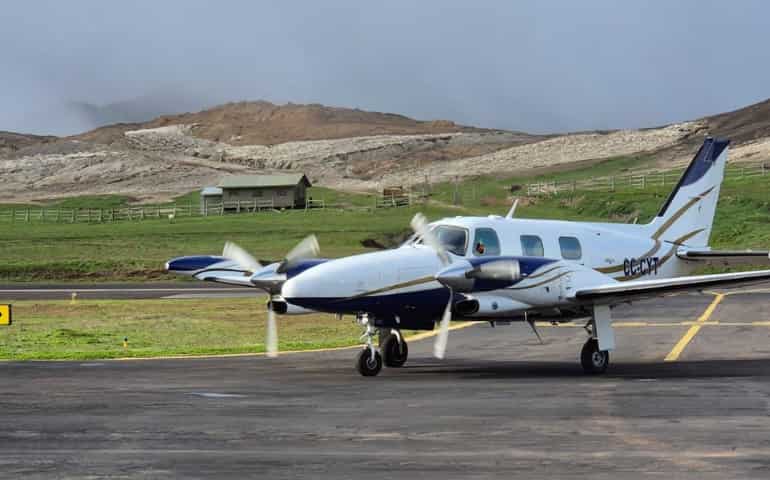
Flying to Robinson Crusoe Island is not like boarding an ordinary domestic flight in Chile. The route serves one of the most remote inhabited territories in the country, far out in the Pacific Ocean, and that means aircraft choice matters enormously. On a route like this, the plane is not just a vehicle. It is a key part of whether the journey is practical, safe, comfortable enough for passengers, and economically viable for the operator.
That is why the aircraft used by operators serving Robinson Crusoe Island deserve attention of their own. Publicly available information suggests that two different operating styles shape this market. On one side are small passenger aircraft used by companies such as Aerolíneas ATA for intimate, low-capacity island services. On the other is a more modern, multi-role regional platform highlighted by Aerocardal: the Let L-410NG, an aircraft designed for short-runway and remote-environment operations. Together, these aircraft types help explain how aviation works in one of Chile’s most isolated travel corridors.
Why aircraft selection matters so much
Not every airplane is suitable for the Robinson Crusoe route. The destination involves long overwater flying, island weather, and infrastructure constraints that are very different from flying between large mainland airports. In remote aviation, the technical fit between aircraft and route is often more important than cabin luxury or maximum seat count.
Operators need aircraft that can handle variable conditions, carry a useful load without requiring major airport infrastructure, and operate economically despite low passenger numbers. In the case of Robinson Crusoe Island, that means the aircraft must be practical for a niche route where demand exists, but not at the scale of mainstream commercial aviation.
This is one reason flights to the island usually feel more exclusive and specialized than normal domestic services. The planes are chosen for capability and adaptability rather than volume, and that shapes the entire passenger experience from booking to landing.
Small aircraft in the Robinson Crusoe market
Aerolíneas ATA’s island information states that its aircraft for Robinson Crusoe have capacity for up to 8 passengers, which immediately shows the boutique scale of operations on this route. That small size is significant because it aligns with the realities of low-volume island demand and the need for operational flexibility.
Travel writing about the route also describes the Robinson Crusoe trip on a small Beechcraft 200-style aircraft, with a 7-seat layout and two pilots, emphasizing just how different the journey is from standard airline travel. JetPhotos also associates Aerolíneas ATA with the Beechcraft 200 King Air, noting the type in connection with Robinson Crusoe operations and cargo activity.
While not every publicly visible image or mention proves the exact fleet assignment for every scheduled flight, the available material strongly indicates that aircraft in the King Air class are part of the operating logic for this route. That makes sense. Aircraft of this category are valued worldwide for regional access, short-field flexibility, reliable twin-engine performance, and suitability for routes that do not justify larger turboprops or jets.
The Beechcraft King Air profile
If a Beechcraft 200 King Air is indeed part of the Robinson Crusoe operating ecosystem, its capabilities explain why. The King Air family is known for combining business-aircraft comfort with rugged regional utility, making it one of the most respected twin-engine turboprop platforms in remote and executive aviation. It is well suited to routes that need modest passenger capacity, strong reliability, and flexibility for mixed passenger and light cargo missions.
For Robinson Crusoe, the biggest advantages of a plane like this are scale and efficiency. An 8-passenger aircraft helps operators match seat supply to actual demand without flying too much unused capacity. It also allows a more controlled, personalized service model, which fits the route’s expedition-like character.
Another important capability is overwater practicality. A twin-engine aircraft offers added operational reassurance compared with a single-engine platform for a route crossing open Pacific waters, even if the trip itself is relatively short by regional aviation standards. For remote island service, that twin-engine logic is a very important part of aircraft suitability.
The Let L-410NG and why it matters
The most detailed technical aircraft information available publicly comes from Aerocardal, which highlights the Let L-410NG as a major addition to its fleet. According to Aerocardal, the L-410NG is an upgraded version of the previous L410 UVP-E20, offering enhanced flight parameters, extended range, an additional 500 kg of payload capacity, and double the storage volume.
That combination is highly relevant for remote Chilean aviation. In island routes, every extra margin in payload and storage can translate into better passenger support, more baggage flexibility, stronger mixed-use performance, or greater mission versatility. Aerocardal also says the aircraft integrates modern Garmin G300 glass cockpit avionics, helping make it one of the more efficient and reliable aircraft for varied missions.
Importantly, Aerocardal does not present the L-410NG as useful only for passenger transport. It describes the aircraft as adaptable for ambulance missions, emergency medical services, cargo operations, and photogrammetric scanning and surveillance. That matters because remote Chilean aviation is rarely only about leisure travel. Aircraft serving these environments often need to support many roles, sometimes across the same operator network.
Short-runway capability
One of the L-410NG’s most interesting strengths is its connection to short takeoff and landing performance. Coverage on the aircraft’s arrival in Chile states that the model has STOL capability and can land in 600 meters, a feature that makes it especially attractive for Chile’s complex geography. That kind of capability is a major advantage in island and regional operations where runway conditions may be more restrictive than those at major airports.
Short-field performance does not automatically solve every operational challenge, but it gives operators more flexibility in planning and helps align the aircraft with demanding airfield environments. In the context of Robinson Crusoe, that is one reason the L-410NG stands out as a strategic aircraft rather than just another fleet addition.
The aircraft also has a reported cruising speed of 225 knots and a payload of 2,300 kilograms, according to aviation coverage of Aerocardal’s acquisition. Those numbers reinforce its profile as a practical utility aircraft that can balance performance, carrying capacity, and mission diversity in a country where aviation often needs to do several jobs at once.
Multi-role value in remote Chile
The real strength of these aircraft is not just that they can reach Robinson Crusoe Island. It is that they can do so while supporting a broader remote-aviation mission set. Aerocardal says the L-410NG aligns with its work in passenger transport and aeromedical evacuation. Reporting on the aircraft’s introduction to Chile also says it is expected to be used for charter flights to the Juan Fernández Archipelago as well as personnel transport for mining, energy, and oil companies, plus medical evacuation and possible cargo work.
That is exactly what makes this aircraft important in the Chilean context. Aircraft serving remote routes often need to justify themselves across multiple sectors, not just tourism. A plane that can carry passengers one day, support medevac capability another day, and move cargo or technical teams on another mission is much more valuable than a single-purpose platform.
Even the Robinson Crusoe route itself benefits from that logic. Seasonal tourism may help fill seats, but the long-term value of the aircraft comes from being useful across many transport needs.
Passenger experience and practical implications
From a traveler’s perspective, these aircraft capabilities translate into a very different flight experience from a mainstream airline journey. Small aircraft like those used by ATA create a more intimate, direct, and adventure-oriented atmosphere, with fewer passengers and a stronger sense that you are taking part in a special operation rather than a routine flight.
The tradeoff is that capacity remains tight, baggage rules are usually stricter, and schedule flexibility is lower than on normal airline routes. But these limits are the direct result of the aircraft’s mission profile. The same characteristics that restrict volume are what make the route possible in the first place.
The L-410NG, meanwhile, suggests a slightly different future direction: one where regional aircraft are modern enough to offer improved flexibility, efficiency, and broader mission support without losing the rugged traits needed for remote access. In that sense, aircraft capability does not just affect comfort. It shapes the sustainability of the whole route.
Safety and environmental fit
Robinson Crusoe is a route where safety margins and operational fit are especially important. The island aerodrome and surrounding weather conditions have long made the route one that requires careful planning and aircraft appropriateness. Public descriptions of steep approaches and crosswinds underline how different this destination is from a standard urban airport arrival.
That is why rugged utility aircraft and small twin-engine platforms remain central. They are not glamorous in the conventional airline sense, but they are the kinds of machines designed to work in demanding, lower-infrastructure environments. In many ways, they are the correct technological response to the realities of remote Chile.
The fit is also environmental in a practical sense. Instead of forcing a large-airline model onto a low-demand route, operators are using aircraft scaled to the destination’s needs. That is a more realistic and sustainable way to maintain access to a fragile, isolated archipelago.
Why these aircraft define the route
In the end, the aircraft used by Transportes Aéreos serving Robinson Crusoe Island are more than background machinery. They define what the route can be. Small aircraft with capacity for around 8 passengers allow specialized, low-volume service to continue. More advanced regional utility aircraft like the Let L-410NG bring expanded payload, updated avionics, short-runway strengths, and multi-role flexibility that fit Chile’s remote-aviation needs.
Together, these capabilities show why aviation to Robinson Crusoe Island depends on specialized equipment rather than ordinary airline hardware. The planes used on this route must bridge distance, adapt to island conditions, and support a transport model where efficiency is measured not by mass volume, but by reliability and suitability.
That is the real story behind aircraft in the Robinson Crusoe market. Their importance lies not only in what they are, but in what they make possible: sustained access to one of Chile’s most isolated and extraordinary destinations.