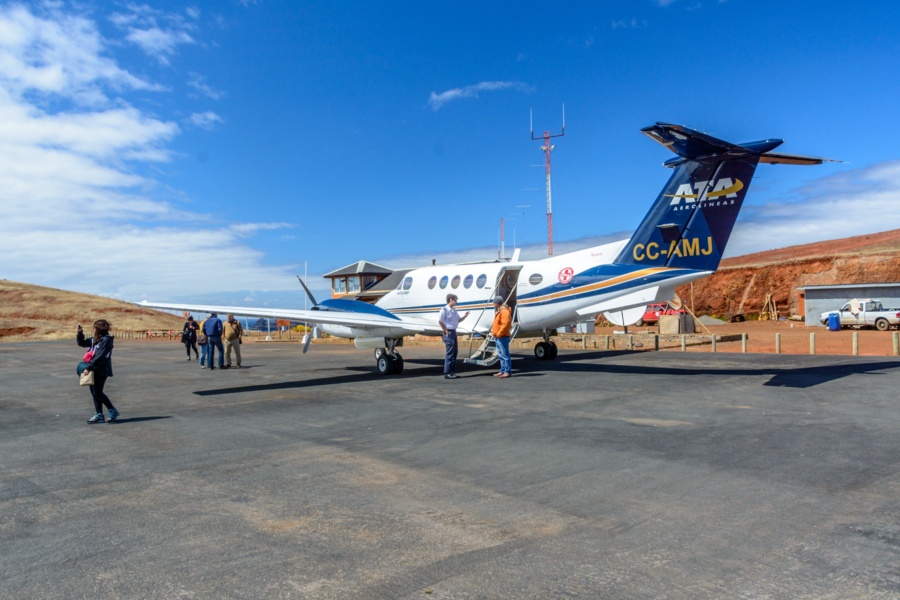
Booking a flight to Robinson Crusoe Island is very different from booking a normal domestic route. The island is reached by private charter service from Santiago to Robinson Crusoe Aerodrome (FEN), and from there travelers continue by boat for about 90 minutes to San Juan Bautista, the island’s main settlement. Because access is limited and weather can affect operations, the booking process requires more planning, more flexibility, and more direct communication than a standard airline reservation.
For many travelers, the name most associated with this route is Transportes Aéreos Isla Robinson Crusoe, often referenced in travel promotions and island flight announcements as the specialist operator for this connection. If you are trying to organize a trip, the key is to understand that you are not purchasing a typical point-to-point commercial airline seat through a broad online booking engine. Instead, you are arranging a charter-based journey to one of Chile’s most remote inhabited islands.
Understanding the Route
Before trying to book, it helps to understand how transport to the island works. Chile’s official tourism information states that the only air access to Robinson Crusoe Island is through Robinson Crusoe Aerodrome, identified as FEN, and that flights depart exclusively from Santiago. The flight itself takes around 2 hours and 30 minutes, after which passengers still need a boat transfer of around 90 minutes to reach San Juan Bautista.
This detail matters because many travelers mistakenly assume they are buying a conventional end-to-end airline itinerary. In reality, the journey has at least two segments: the air leg from Santiago to FEN and the onward maritime transfer to town. That means when you compare quotes or ask for availability, you should verify whether the boat transfer is included, coordinated, or paid separately.
Another important point is that Robinson Crusoe flights are not presented like large-scale scheduled airline routes on most global booking systems. Even when major travel sites mention flights “to Isla de Robinson Crusoe,” the details often really refer to commercial flights to Santiago, which is the staging point for the charter flight rather than the final island air service itself. In practice, Santiago is where your standard commercial itinerary ends and the specialist island booking begins.
Why Booking Is Different
The first reason booking is unusual is low capacity. Charter service to a remote island naturally operates with fewer seats and more limited schedules than commercial airlines, so availability can disappear quickly, especially in the warmer travel season. Chile Travel recommends planning and checking tickets and lodging in advance, particularly because the best time to visit is between November and March.
The second reason is weather. Island operations are exposed to Pacific conditions, and delays or schedule changes are a normal risk on this route. Travelers should never build a tight same-day international connection around a Robinson Crusoe departure or return, because any disruption can affect the entire itinerary.
The third reason is that booking often depends on direct contact rather than instant online self-service. Recent promotional posts tied to Robinson Crusoe flights direct travelers to reserve through phone or WhatsApp rather than through a standard airline checkout flow, which suggests that seat sales may still rely heavily on manual confirmation. That makes it especially important to confirm payment rules, baggage limits, cancellation terms, and reporting time before sending money.
How to Start the Booking Process
The smartest way to begin is by setting your travel window first. Since official guidance highlights November through March as the best season for visiting, those months are likely to attract the most demand, so early inquiry is essential. If your dates are flexible, ask for several possible departures instead of only one exact day.
Next, organize the basics you will need before contacting the operator or authorized seller:
- Full passenger names exactly as shown on passports or IDs.
- Nationality and document number.
- Preferred outbound and return dates.
- Body weight or baggage details if requested.
- Contact phone number and email.
- Whether you also need lodging or ground/boat coordination.
Having these details ready speeds up quoting and reduces back-and-forth. On remote charter routes, operators often need precise passenger data earlier than regular airlines do, because planning is more operationally sensitive.
After that, reach out through the active reservation channel being advertised for the season. Public flight promotions for Robinson Crusoe have recently pushed travelers toward WhatsApp and telephone booking contacts for reservations. If you find a seat offer on social media, verify that the account is current, that the departure is clearly for Robinson Crusoe Island in Chile, and that the flight leaves from Santiago, since unrelated “Robinson Crusoe” travel results online can refer to Fiji rather than Chile.
Questions to Ask Before Paying
When speaking with the carrier or seller, do not stop at the ticket price. Ask what the fare actually includes, because island logistics often involve separate services. At minimum, confirm these points:
- Is the fare one-way or round-trip.
- Are taxes included.
- Is the boat transfer to San Juan Bautista included.
- What is the baggage allowance.
- What happens if weather delays the flight.
- Can dates be changed.
- What is the cancellation or refund policy.
- How early must passengers report in Santiago.
These questions matter because the full travel cost is not only the airplane seat. Even official tourism information makes clear that reaching the town requires a further 90-minute boat transfer after landing at FEN. If that is not included, your “flight price” may understate the real cost of the journey.
You should also ask whether the provider recommends arriving in Santiago the day before departure. Given the route’s dependency on weather and limited frequency, building in a buffer is a practical safeguard rather than an unnecessary extra expense.
Booking from Outside Chile
If you are traveling from Lima, Buenos Aires, Miami, or another international gateway, your booking process usually has two layers. First, you book a normal commercial flight to Santiago through a mainstream airline or agency. Expedia’s current listings, for example, show routine commercial fares from Lima and Buenos Aires to Santiago, which reflects the first part of the trip rather than the island charter itself.
Second, you separately secure the island flight from Santiago to FEN through the Robinson Crusoe charter operator or a specialized intermediary. This separation is important because if your international inbound flight changes, you may need to adjust a completely different reservation system for the island leg.
For this reason, many experienced travelers prefer to arrive in Santiago at least one day before the island departure and stay one extra day after the return. That buffer reduces the risk of losing a seat because of delays on the commercial segment, and it gives you more room if island operations move due to weather.
Payment and Confirmation
Once availability is confirmed, ask for the total payable amount in writing. Because these bookings may be handled directly through messaging or manual sales channels, you should request a formal confirmation that includes passenger name, date, route, luggage terms, and payment instructions.
Do not rely only on a chat screenshot that says “reserved.” A proper confirmation should clearly state whether your seat is ticketed, temporarily held, or pending payment. If a deposit is required, ask for the deadline and whether the balance can be paid later.
After payment, keep all receipts and save the contact number you used. On remote routes, rapid communication matters more than on large airline systems because schedule updates may be issued directly to passengers rather than through a complex automated portal.
Common Mistakes to Avoid
One common mistake is assuming the flight lands directly in the town. It does not; official guidance says arrival is at Robinson Crusoe Aerodrome, followed by a boat trip of about 90 minutes to San Juan Bautista.
Another mistake is using generic flight websites as if they fully book the island route. Large travel engines can help you get to Santiago, but official destination information shows that the island itself is served by private charter departures from Santiago, not a normal mass-market airline network.
A third mistake is underestimating seasonality. Since the recommended travel period is the warmer, drier season from November to March, demand can concentrate in those months. If you wait too long, you may find that the main issue is not price but simply seat scarcity.
A fourth mistake is failing to verify the departure point. The official route departs from Santiago, so if a seller or page does not clearly identify Santiago as the origin, double-check before paying.
Best Booking Strategy
The most effective booking strategy is simple. First, reserve flexible commercial flights to Santiago. Second, contact the Robinson Crusoe flight operator as early as possible for seat availability. Third, confirm whether the boat transfer and baggage are included. Fourth, hold extra time on both ends of the itinerary in case weather alters operations.
This approach costs a little more in planning time, but it greatly reduces stress. Robinson Crusoe Island is one of those destinations where the journey is part of the experience, and the booking process reflects that reality.